Showing posts with label About the Book. Show all posts

Thursday, August 7, 2008

Welcome to a sneak preview of Growing and using Stevia: The Sweet Leaf from Garden to Table with 35 Recipes, your complete guide to growing, harvesting, processing, and using stevia at home. Order your copy through online vendors such as:

Prairie Oak Publishing
Amazon.com
Many of the companies listed in "Stevia Sources"

or ask your local bookstore or plant nursery to order it for you.
###

News Release for Growing and Using Stevia

For Immediate Release
Contact: Jeffrey Goettemoeller, 660-528-0768
prairieoakpub@gmail.com

“...one of our favorites. It’s simple and all in one. You get the facts, recipes, and how to grow it. The price is economical and we are happy to offer it along with live plants and other stevia products.”
—Marshall & Judy Ayer; Ayer Natural Market & Greenhouse; Bluford, IL

Grow the Sweet Herb at Home!

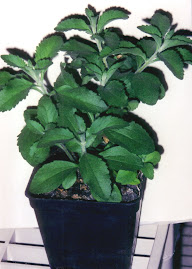
August 2008 — Stevia rebaudiana is a natural, low glycemic, low calorie alternative to sugar and artificial sweeteners. Grow this amazing sweet leaf in your own garden, and then use your homegrown stevia in recipes!

Growing and Using Stevia is the complete home stevia guide from garden to table, with chapters about propagating, growing, harvesting, and processing stevia, indoors and out. This book also tells how to use homegrown Green Stevia Powder or Stevia Leaf Water Extract in 35 recipes developed in the Lucke and Goettemoeller kitchens. This step-by-step how-to manual is illustrated with 33 grayscale photos.

Learn how to:
Start stevia from seeds, cuttings, or transplants.
Grow stevia in your garden or in containers.
Harvest leaves and make your own green powder or liquid stevia extract.
Use homegrown green stevia in pies, frozen desserts, herb tea, smoothies, and more!

Authors Jeffrey Goettemoeller and Karen Lucke are siblings who grew up gardening and enjoying wholesome home cooking. Karen is now a nutritionist and reflexologist. Jeffrey is the author of Stevia Sweet Recipes: Sugarfree—Naturally!, with over 300,000 copies in print. He also majored in horticulture at Northwest Missouri State University and completed a published research study on the production of Stevia rebaudiana seeds.

Growing And Using Stevia is available from www.prairieoakpublishing.com, www.amazon.com, www.barnesandnoble.com, or contact Prairie Oak Publishing: prairieoakpub@gmail.com.

###
Growing and Using Stevia: The Sweet Leaf from Garden to Table with 35 Recipes
by Jeffrey Goettemoeller and Karen Lucke. 2008, 6 x 9, 88 pages, 33 illustrations, perfect binding. ISBN 978-0-9786293-3-5. LCCN 2008925032. $10.00, retail.

Table of Contents

From Growing and Using Stevia: The Sweet Leaf from Garden to Table with 35 Recipes.

Front Matter
Introdution to Stevia
1. About the Stevia Plant
2. Outdoor Soil and Culture
3. Houseplants
4. Propagation by Cuttings
5. Propagation from Seed
6. Harvest and Storage
7. Processing Stevia Leaves
8. Stevia in the Kitchen
9. Recipes
Stevia Sources and Resources
Glossary
General Index
Recipe Index
###

Wednesday, August 6, 2008

Publication Information for Growing and Using Stevia

Authors: Jeffrey Goettemoeller & Karen Lucke
Publisher: Prairie Oak Publishing
ISBN: 978-0-9786293-3-5
LCCN: 2008925032
Pages: 88
Figures: 31 photos
Binding: perfect bound paperback
Dimensions: 6 by 9 inches
Retail Price: $10.00
Publication Date: May 2008
Retail Availability: Amazon.com, Prairie Oak Publishing, barnesandnoble.com, or ask your local book store to order it for you. Also available from many of the business listed in sources.
Wholesale Availability: Prairie Oak Publishing, Ingram Book Co., YBP. Email prairieoakpub@gmail.com to inquire about purchasing from the publisher for resale.
###

Stevia, The Sweet Leaf of South America


Following is the Introduction from Growing and Using Stevia: The Sweet Leaf from Garden to Table with 35 Recipes.

The leaves of Stevia rebaudiana are much sweeter than common sugar. No wonder it’s sometimes called “sweet leaf” in Paraguay and Brazil where it originated. Stevia leaves, though, are low-glycemic, low-calorie,[1] and do not encourage dental cavities.[2] All this makes stevia a great natural alternative to sugar and artificial sweeteners.

Stevia does not taste exactly like sugar. It has a unique flavor; much like honey or maple syrup have their own flavors—especially in the case of whole green stevia. Most people find the taste pleasant when the proper amount is used to make tea or combined with compatible ingredients.

The Problem with Refined Sugar

Why avoid sugar? It’s OK in moderation, but refined sugar adds lots of calories to the diet without contributing significant amounts of nutrients. The average American diet includes so many of these empty calories, there’s little room for needed nutrients. This can lead to malnutrition and obesity. A 2005 Penn State study found the average U.S. preschooler gets 14–17 teaspoons of added sugar per day![3] Twelve percent of the 4 and 5 year-olds surveyed got more than 25% of their calories from added sugar. These children also had the lowest consumption of most nutrients. They didn’t get enough grains, vegetables, fruits, and other nutrient-rich foods. Another issue with refined sugar, white flour, and other foods with a high glycemic index is that they enter the blood stream quickly, leading to rapid fluctuations in blood sugar levels. Finally, too much sugar can encourage tooth decay and more time at the dentist’s office.

What About Artificial Sweeteners?

Artificial sweeteners have drawbacks as well. Aspartame, for instance, should not be used in cooking. When heated, it breaks down into its constituent parts. Additionally, aspartame has been a major cause of health related complaints to the FDA (U.S. Food and Drug Administration).[4] Stevia, on the other hand, has not prompted reports of health problems despite being used in large quantities since the 1970’s in countries such as Japan.[5]

Order your copy of Growing and Using Stevia: The Sweet Leaf from Garden to Table with 35 Recipes through one of these links:

directly from Prairie Oak Publishing
from Amazon.com.


Notes

[1] A 2004 study confirmed stevia leaf is lower in calories than aspartame, much sweeter than sucrose, and has a lower glycemic index as compared to sucrose: S.M. Savita and others, 2004 “Stevia rebaudiana—A Functional Component for Food Industry,” Journal of Human Ecology 15 (4): 261-264.
[2] A University Of Illinois College Of Dentistry study found that neither Stevioside nor Rebaudioside A (the main sweet glycosides in stevia) was cariogenic (promoting of dental cavities) under the conditions of the study. S. A. Das and others. 1992. "Evaluation of the Cariogenic Potential of the Intense Natural Sweeteners Stevioside and Rebaudioside A". Caries Research. 26 (5): 363.
[3] S. Kranz, H. Smiciklas-Wright, A. M. Siega-Riz, and D. Mitchell. 2005. "Adverse Effect of High Added Sugar Consumption on Dietary Intake in American Preschoolers," Journal of Pediatrics 146 (1): 105-111.
[4] cf. Centers for Disease Control (CDC). 1984. "Evaluation of consumer complaints related to aspartame use". MMWR. Morbidity and Mortality Weekly Report. 33 (43): 605-7.
[5] cf. Daniel Mowery, Ph.D., Life with Stevia: How Sweet it is! 1992. Available online: http://healthfree.com/stevlife.html

###